Collector & Valuation Guide

The Mosin-Nagant PU 1942 Sniper

Forged during the critical crisis of 1942, the 91/30 PU Sniper served as the precision backbone of the Red Army. Built for American collectors, researchers, and historians, this platform provides in-depth wartime chronicles, real-time market appraisals factoring in scope matching (typical rifles ~ $2,000; 1942 Tula holy grails up to $8,000), forensic authenticity verification, and complete factory production archives.

< 25
1942 Tula PU in USA (Holy Grail)
346,853
Total WWII Production (Izhevsk & Tula)
$700 – $8,000
US Market Range (Median ~ $2,000)
5 Plants
Soviet Optical Producers
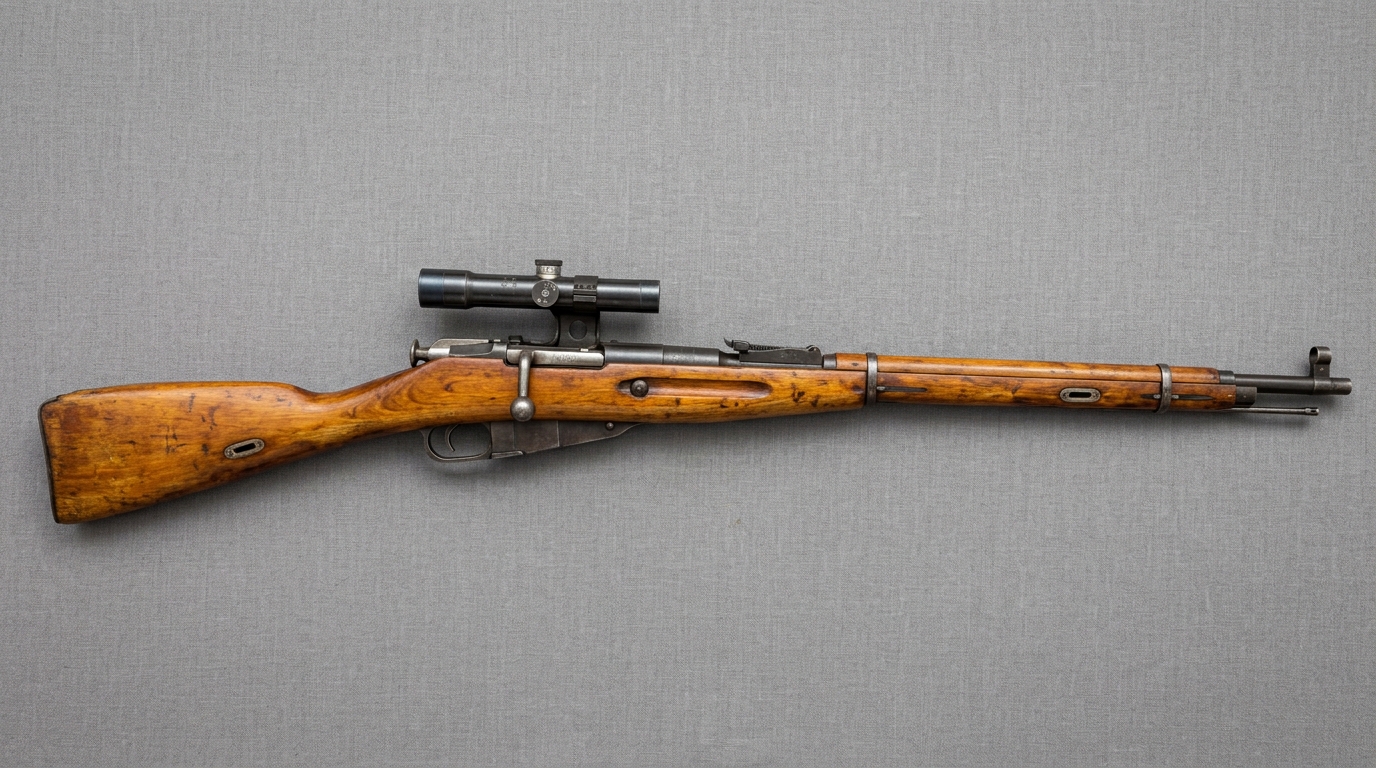
Authentic World War II Soviet Mosin-Nagant Model 1891/30 PU Sniper Rifle Profile on Neutral Linen
WWII Soviet 91/30 PU Sniper Profile Izhevsk / Tula 7.62×54mmR

History of the Mosin-Nagant PU Sniper & Its Optics

Explore the wartime genesis of the 91/30 PU sniper in 1942, Dmitry Kochetov's revolutionary side mount, the dramatic evacuation of Tula Factory #535, and the metallurgical evolution of the 3.5x PU scope across five Soviet optical plants.

THE 1942 TURNING POINT

1. The 1942 Crisis: Why the 91/30 PU Was Born

When Nazi Germany invaded the Soviet Union in Operation Barbarossa (June 1941), the Red Army’s primary sniper rifles were the Mosin 91/30 with top-mounted PE (1931/1937) and PEM (1938) scopes, and the semi-automatic SVT-40 Sniper Rifle.

Both designs quickly proved problematic under the harsh realities of total war:

  • The SVT-40 Sniper Failure: While fast-firing, the semi-automatic SVT-40 sniper suffered from severe vertical first-round dispersion (the notorious "first shot flier") and proved delicate in freezing mud and grit. On October 1, 1942, the Soviet State Defense Committee (GKO Order No. 0641) officially terminated SVT-40 sniper production.
  • PE/PEM Top Mount Shortcomings: Pre-war top-mounted PE/PEM brackets were complex, heavy, required tedious hand-fitting, and completely blocked the receiver bridge—preventing snipers from loading with standard 5-round stripper clips.

The Red Army needed a rugged, bolt-action precision rifle that was fast to manufacture, dead reliable in sub-zero Russian winters, and capable of being reloaded rapidly with standard 5-round stripper clips in the trenches. The answer was the 91/30 PU, officially adopted in late 1942.

MECHANICAL INNOVATION

2. Dmitry Kochetov & The Side Mount Breakthrough

The defining engineering breakthrough that made the 91/30 PU possible was designed by Dmitry Mikhailovich Kochetov (chief designer at Tula Central Design Bureau TsKB-14).

Kochetov abandoned top receiver mounts and engineered an offset side-mount system consisting of a heavy receiver base pinned with two hardened steel taper pins and clamped with two heavy screws, paired with an upper bracket carrying two 26.5mm split clamping rings.

Stripper Clip Clearance

Because the mount was offset to the left, the top of the action was completely open, allowing snipers to reload with standard 5-round charger clips in seconds.

Backup Iron Sight Access

The elevation of the optic was engineered so that snipers could look directly beneath the scope tube and use the rifle's tangent iron sights for rapid combat targets at 100–600 meters.

Rough Radius Fit

Genuine Kochetov mounts were hot-forged with interior milling chatter that clamped solidly against the round receiver radius under heavy 7.62×54mmR recoil.

THE $8,000 COLLECTOR HOLY GRAIL

3. The Siege of Tula & 1942 Mednogorsk Evacuation

In October 1941, Heinz Guderian's 2nd Panzer Group drove toward Moscow and laid siege to the historic arms city of Tula. Workers at Tula Arms Factory #535 dismantled precision lathes and milling machines under direct German artillery shelling and evacuated by train 1,200 miles east across the Ural Mountains to the remote town of Mednogorsk.

Working in unheated wooden sheds and railway boxcars during the brutal winter of 1941–1942, Tula gunsmiths hand-assembled just ~2,020 PU snipers in 1942 before re-establishing full industrial production in early 1943.

Why 1942 Tula Rifles Reach $8,000 Today:

Due to ferocious frontline combat attrition during the 1942 Soviet counter-offensives, surviving authentic 1942 Tula PU snipers are extraordinarily scarce. Archival registries at m9130.info document fewer than 25 verified authentic examples in the entire United States, making them the absolute pinnacle centerpiece of any Mosin Nagant collection.

OPTICAL EVOLUTION

4. Origins & Metallurgy of the 3.5x PU Scope (1940–1945)

The PU Scope («ПУ» — Прицел Укороченный / "Shortened Scope") was originally engineered in 1940 at Factory #357 «Progress» in Leningrad for the SVT-40. When Leningrad was cut off in the deadly 900-day Nazi blockade, Factory #357 was evacuated to Omsk in Siberia.

1940–1942
Progress #357 & FED Kharkov Origins: Early PU scopes were produced for the SVT-40. When SVT snipers were canceled in 1942, thousands of leftover scopes (including early FED scopes from Kharkov) were retrofitted to 1942 Mosin snipers using specialized metal shims in the rings.
1943
Optical Expansion (Yoshkar-Ola #297 & Krasnogorsk #393): To meet immense frontline demands, Factory #297 in Yoshkar-Ola and Factory #393 in Krasnogorsk joined production. Krasnogorsk engineered scopes using Silumin (aluminum-silicon alloy) with chemical anodization to conserve steel.
1944–1945
Factory #237 Kazan & Peak Output: Factory #237 in Kazan produced late-war PU optics supplied directly to final 1944 Tula snipers. By war's end, over 500,000 PU scopes had been manufactured across the 5 plants.
DOCTRINE & SURPLUS PRESERVATION

5. Sniper Doctrine in Action & The Cold War Strategic Reserve

Unlike Western militaries that initially treated snipers as specialized scouts, the Red Army embedded trained snipers throughout regular rifle platoons. Operating in coordinated pairs (observer with binoculars + shooter with PU sniper), Soviet snipers wreaked havoc on enemy officers, machine-gun crews, and artillery spotters in the ruins of Stalingrad, Sevastopol, and Berlin.

"A sniper’s most powerful weapon is not just his marksmanship, but his patience and his rifle's absolute reliability under fire."

Following the victory in May 1945, the Soviet military inspected, cleaned, and refurbished their precision rifle stockpiles at major GRAU artillery arsenals:

  • Arsenal Refurbishment (1950s–1970s): Arsenals like Riga No. 7 and Kiev No. 2 re-blued actions, electro-penciled matching components, and fitted replacement optics.
  • Strategic Storage in Salt Mines: Tens of thousands of refurbished snipers were packed into heavy wooden crates coated in cosmoline and stored in climate-controlled underground salt mines (such as the famous Artemivsk/Soledar mines in Ukraine).
  • American Import Boom (1990s–2010s): When these strategic reserves were liquidated following the collapse of the Soviet Union, unissued crates entered the US surplus market through importers like RGuns, Molot, ATI, and Century Arms—fueling today’s passionate American collecting community.
US Collector Valuation & Scope Pricing Engine

Accurately calculate current fair market prices based on factory, year (1942 Tula scarcity up to $8,000), stock condition (unsanded cartouche premium), serial matching type, scope matching and optical clarity, and importer marks. Most authentic Soviet refurbs sit right around $2,000.

Authenticity Inspector: Real vs. Reproduction Wizard

Step through our 6-point forensic checklist to verify whether a rifle is a 100% original wartime sniper, an authentic Soviet Cold War arsenal refurbishment, an ex-sniper restoration, or a modern commercial "faux" clone.

Markings, Proofs & Interactive Reticle Simulator

Test the interactive 3.5x PU scope reticle ballistic rangefinder, inspect Izhevsk vs Tula barrel shanks, and study the 5 Soviet optical factory logos.

Factory & Year Production Matrix (1942–1947)

Filter and search complete historical production numbers, scarcity tiers, survival estimates in the United States, and verified Cyrillic serial letter prefixes for Izhevsk Factory #74 and Tula Factory #535.

US Importer Provenance & Batch Guide

Explore the major import batches that entered the American market: RGuns, Molot, Century Arms (real refurbs vs faux builds), Mitchell's Mausers, ATI, and Samco.

Frequently Asked Questions: Mosin PU Snipers

Authoritative answers to the most common questions asked by American collectors regarding Mosin-Nagant 91/30 PU sniper authenticity, market valuations, markings, and scope variations.

How much is an authentic Mosin-Nagant 91/30 PU sniper worth?

In the current US collector market, standard authentic Soviet Cold War arsenal refurbished 91/30 PU snipers (1943–1944 Izhevsk) typically sell between $1,700 and $2,300 (median ~$2,000). Highly sought-after original non-refurbished rifles, unissued vet bring-backs, and ultra-rare 1942 Tula snipers with all-stamped factory matching scopes and unsanded stocks reach between $5,500 and $8,000. Conversely, commercial reproduction "faux" sniper clones are worth only $700 to $950.

How can I tell if my Mosin-Nagant PU sniper is authentic or a fake reproduction?

To verify authenticity, inspect four primary areas:

  1. Barrel Shank Proofs: Izhevsk rifles must have a "C in a circle" stamp and the scope serial stamped on the left shank. Tula rifles must have a Cyrillic "СН" stamp above the star and NO scope serial on the shank.
  2. Receiver Geometry: Must be a round high-wall receiver with a smooth, factory-milled mount clearance notch blued over before assembly (never hexagonal).
  3. Mount & Screws: Authentic Kochetov mounts are hot-forged with interior milling chatter, domed screw heads, and locking pins (never flat-headed machine screws).
  4. Scope Construction: Must have domed turret screws with locking pins and authentic wartime factory logos (Progress #357, Krasnogorsk #393, Yoshkar-Ola #297, Kazan #237, or FED #353).
Why is a 1942 Tula Mosin PU sniper so rare and valuable?

In late 1941 and early 1942, Tula Factory #535 was evacuated under German artillery siege 1,200 miles east to Mednogorsk in the Ural mountains. Working in unheated railway sheds, workers hand-assembled only approximately 2,020 PU snipers in 1942. Due to brutal combat attrition during wartime counter-offensives, fewer than 25 verified examples are known to survive in the United States today, commanding up to $8,000 among collectors.

What do the "C in a circle" and Cyrillic "СН" barrel shank markings mean?

"C in a circle" (С) is the official accuracy proof applied by Izhevsk Factory #74 denoting that the barrel passed rigorous accuracy group testing for sniper service. Cyrillic "СН" (standing for Снайпер / "Sniper") was stamped by Tula Factory #535 directly above the Tula star for the same accuracy acceptance.

How much value does an authentic matching PU scope add to the rifle?

An original factory-matching scope (where the scope's physical serial matches the serial number stamped on an Izhevsk barrel shank) adds a $1,500 to $2,000+ premium to the rifle's value. A standard authentic Soviet refurbished scope adds approximately $500 baseline value, whereas missing a scope or having a modern Chinese/Ukrainian reproduction scope penalizes the rifle by -$700 to -$850.

Are Century Arms (CAI) Mosin PU snipers real or reproductions?

Century Arms sold two completely different categories of Mosin PU snipers. CAI imported 100% authentic Soviet arsenal refurbished snipers directly from military storage (identifiable by genuine sniper barrel proofs, factory receiver notches, and forged mounts, worth $1,800+). However, Century also assembled commercial "faux" sniper conversions in the US by drilling standard infantry M91/30 rifles, bending straight bolts, and mounting reproduction scopes (worth $700–$950 shooter grade).

Buyer's Field Inspection Checklist

A high-yield 10-point rapid evaluation checklist for gun shows, auctions, pawn shops, and estate sales. Check items in real-time to generate a printable inspection score.